Discover Which Camino Path is Right for You on This Timeless Pilgrimage
Every year, hundreds of thousands of people from around the world lace up their boots and embark on the legendary Camino de Santiago, a network of pilgrimage routes leading to the shrine of the apostle Saint James in Santiago de Compostela, Spain.
But did you know the Camino isn’t just one trail?
There are actually several major Camino routes, each with its own unique history, scenery, and cultural flavor. Whether you’re looking for solitude, a social experience, dramatic coastlines, or medieval villages, there’s a route for every kind of pilgrim.
Let’s explore the most iconic paths that make up the Camino de Santiago.
1. Camino Francés (The French Way)

Distance: ~780 km (from Saint-Jean-Pied-de-Port)
Duration: 4–6 weeks
Popularity: ⭐⭐⭐⭐⭐
The most popular and well-known route, the Camino Francés is the classic pilgrimage experience. It begins in the French Pyrenees and winds through the heart of northern Spain, passing through iconic towns like Pamplona, Burgos, León, and ultimately Santiago.
Why Choose It?
- Excellent infrastructure (hostels, cafes, waymarking)
- Great community of pilgrims from around the world
- Rich mix of history, architecture, and varied landscapes
Perfect for: First-time pilgrims and social walkers.
2. Camino Portugués (The Portuguese Way)

Distance: ~620 km (from Lisbon) / ~240 km (from Porto)
Duration: 2–4 weeks
Popularity: ⭐⭐⭐⭐
The Portuguese Way takes pilgrims from Lisbon or Porto northward through vineyards, forests, and charming riverside towns. The Central Route is the most traveled, while the Coastal Route (Caminho da Costa) offers stunning views of the Atlantic.
Why Choose It?
- Gentler terrain than the Camino Francés
- Delicious Portuguese and Galician cuisine
- Coastal variation offers scenic beach walks
Perfect for: Foodies, beach lovers, and those looking for a slightly quieter path.
3. Camino del Norte (The Northern Way)

Distance: ~825 km (from Irún)
Duration: 4–6 weeks
Popularity: ⭐⭐⭐
Running along the rugged northern coast of Spain, the Camino del Norte is the most scenic and least crowded of the major routes. Expect sweeping ocean views, challenging ascents, and quaint fishing villages.
Why Choose It?
- Spectacular coastal landscapes
- Cooler summer temperatures
- Fewer crowds for a more introspective journey
Perfect for: Experienced hikers and nature lovers.
4. Camino Primitivo (The Original Way)

Distance: ~320 km (from Oviedo)
Duration: 2–3 weeks
Popularity: ⭐⭐⭐
The Camino Primitivo is the oldest known Camino route, first walked by King Alfonso II in the 9th century. It traverses the rugged mountains of Asturias and Galicia, offering a physically demanding yet spiritually rewarding trek.
Why Choose It?
- Steeped in historical authenticity
- Wild, remote mountain landscapes
- Less developed and more challenging
Perfect for: Adventure seekers and history buffs.
5. Via de la Plata (The Silver Way)

Distance: ~1,000 km (from Seville)
Duration: 6–8 weeks
Popularity: ⭐⭐
The Via de la Plata is the longest Camino route, stretching from southern Spain up through the western interior. It features Roman roads, wide open landscapes, and fewer pilgrims.
Why Choose It?
- Warm weather year-round (ideal for winter walking)
- Roman ruins and ancient cities
- Ideal for solitude and reflection
Perfect for: Long-distance walkers and off-the-beaten-path explorers.
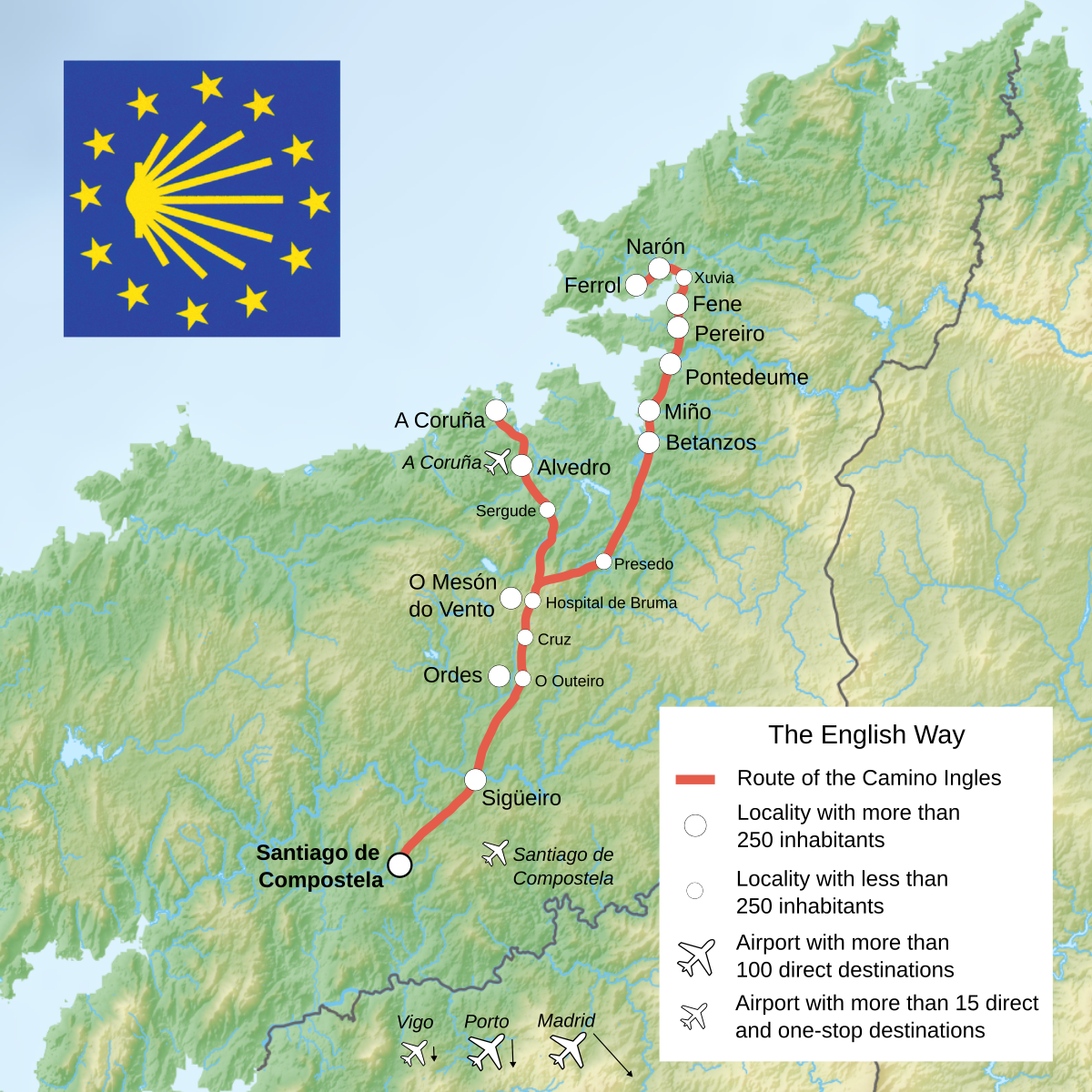
6. Camino Inglés (The English Way)

Distance: ~120 km (from Ferrol)
Duration: 5–7 days
Popularity: ⭐⭐
The Camino Inglés was historically used by pilgrims from the British Isles who arrived by boat. Today, it’s one of the shortest routes that still qualifies for the Compostela certificate (you need at least 100 km).
Why Choose It?
- Quick pilgrimage for time-constrained travelers
- Beautiful Galician countryside
- Less crowded, great for quiet contemplation
Perfect for: Weekend warriors and first-timers testing the waters.
Bonus: Finisterre & Muxía Way

Distance: ~90 km (from Santiago to Finisterre)
Duration: 3–5 days
Not technically part of the pilgrimage to Santiago, this optional extension continues to Finisterre—once thought to be the “end of the world”—and on to Muxía, where pilgrims often perform symbolic rituals like burning clothes or boots.
Why Choose It?
- A poetic way to end the pilgrimage
- Ocean sunsets and coastal cliffs
- Deep spiritual significance for many pilgrims
Perfect for: Those who want closure and reflection after reaching Santiago.
Which Camino is Calling You?
No matter which path you choose, walking the Camino de Santiago is more than a hike—it’s a transformative journey steeped in tradition, self-discovery, and shared humanity.
So, where will your footsteps take you?

Buen Camino!
Have you walked any of these routes? Share your experience in the comments below or tag us on Instagram @YourCaminoJourney!
Leave a Reply