Key Moments in Greek-Turkish Relations
Few neighboring nations share a history as long, intertwined, and emotionally charged as Greece and Turkey. Linked by geography, culture, trade, and conflict, their relationship has evolved over millennia—shaped by empires, wars of independence, population exchanges, and modern geopolitics.
Understanding Greek–Turkish relations requires looking beyond headlines and into the deeper historical currents that continue to influence both countries today. Below is a journey through the key moments that defined this complex relationship.
Ancient Roots: Greeks in Anatolia
Greek presence in Asia Minor (modern-day Turkey) dates back to at least the 8th century BCE, when Greek city-states established colonies along the Aegean coast, including Smyrna (İzmir), Ephesus, and Miletus.
These regions became hubs of:
- Philosophy and science (Thales, Heraclitus)
- Trade between East and West
- Early democratic and civic traditions
At this stage, there was no “Greek–Turkish” conflict—Turkic peoples had not yet arrived in Anatolia. But these ancient Greek roots would later become a powerful source of historical memory and national identity.
The Byzantine–Seljuk Turning Point (11th Century)

A decisive shift came in 1071, with the Battle of Manzikert, where Seljuk Turks defeated the Byzantine Empire. This battle:
- Opened Anatolia to Turkic settlement
- Marked the beginning of Turkish political dominance in the region
- Weakened Byzantine control irreversibly
For Greeks, this period marked the gradual loss of Asia Minor—one of the most emotionally resonant chapters in their historical narrative.
The Ottoman Era: Coexistence and Hierarchy (1453–1821)
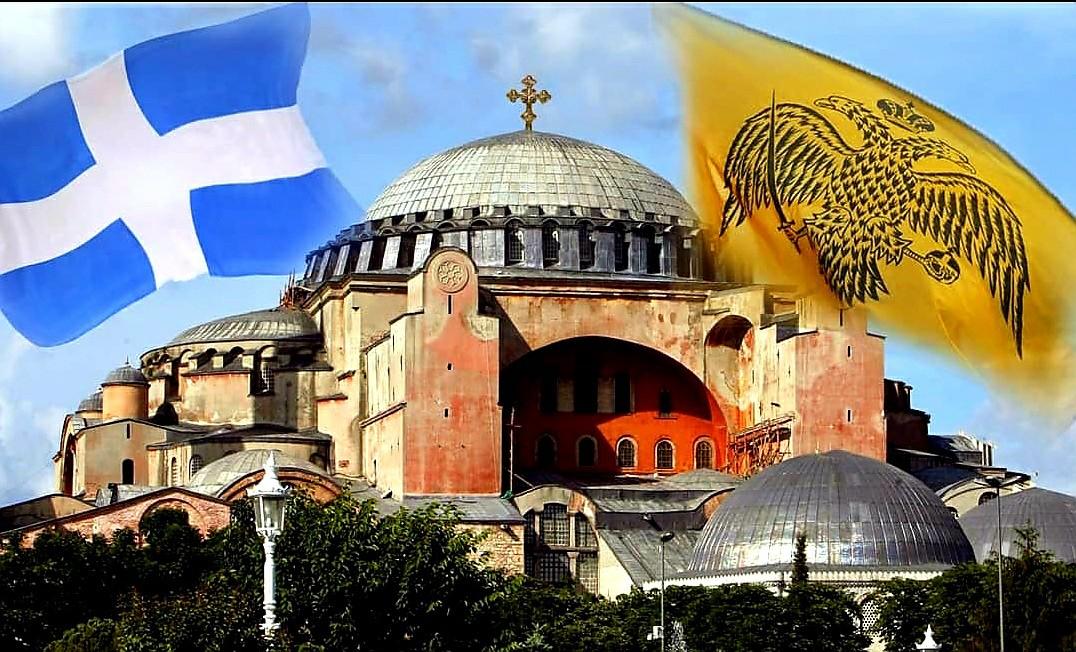
The fall of Constantinople in 1453 to the Ottomans was a world-changing moment. For nearly 400 years, most Greeks lived under Ottoman rule.
Key features of this era included:
- The millet system, which allowed Orthodox Christians religious autonomy
- Greek elites (Phanariots) serving as administrators and diplomats
- Heavy taxation and legal inequality for non-Muslims
While the period is often remembered in Greece as one of oppression, daily life also involved coexistence, cultural exchange, and economic interdependence—especially in cities and ports.
Greek Independence and the Birth of Rival Nationalisms (1821–1830)

The Greek War of Independence (1821–1830) marked the first successful nationalist revolt against the Ottoman Empire.
Why it mattered:
- Greece became the first modern nation to break away from Ottoman rule
- European powers intervened, shaping the region’s future
- Mutual trauma hardened perceptions on both sides
For Greeks, independence was a rebirth. For the Ottomans, it was a warning sign of imperial decline.

The Catastrophe of 1922 and the Population Exchange

Perhaps the most defining modern moment came after World War I.
The Greco-Turkish War (1919–1922)
- Greece attempted to expand into Asia Minor
- Turkish nationalist forces, led by Mustafa Kemal Atatürk, resisted
- The war ended in a decisive Turkish victory
The Aftermath
- The Great Fire of Smyrna
- The 1923 population exchange, forcing:
- ~1.5 million Orthodox Christians to Greece
- ~500,000 Muslims to Turkey
This legally mandated exchange uprooted centuries-old communities and cemented national separation along religious and ethnic lines. Trauma from this period still echoes in family histories today.
NATO Allies, Cold War Rivals (1950s–1970s)
Despite joining NATO together in 1952, tensions persisted.
Key flashpoints:
- Istanbul Pogrom (1955) targeting Greek minorities
- Disputes over airspace and continental shelves
- The ongoing Cyprus question
Cyprus: The Enduring Wound (1974–Present)

In 1974, a Greek-backed coup in Cyprus was followed by a Turkish military intervention, leading to:
- The island’s division into north and south
- Massive displacement of Greek and Turkish Cypriots
- A frozen conflict that remains unresolved
Cyprus remains the single most emotionally and diplomatically sensitive issue in Greek–Turkish relations.
The Aegean and Eastern Mediterranean Disputes

In recent decades, tensions have shifted toward:
- Maritime borders
- Exclusive Economic Zones (EEZs)
- Energy exploration
- Airspace violations
While confrontational rhetoric periodically spikes, outright conflict has been avoided—largely through diplomacy, international pressure, and economic interdependence.
Moments of Rapprochement: Earthquakes and Empathy
Not all chapters are defined by conflict.
Notable thawing moments include:
- 1999 earthquakes in both countries, prompting mutual aid
- Cultural exchanges, tourism, and people-to-people diplomacy
- Growing academic and civil society cooperation
These moments reveal a quieter truth: public empathy often moves faster than politics.
A Relationship Still Being Written

Greek–Turkish relations are neither a simple rivalry nor an inevitable clash. They are the result of:
- Shared geography
- Deep historical memory
- National identity shaped by both trauma and coexistence
The Aegean Sea has been a bridge as often as it has been a boundary. Understanding the past doesn’t resolve today’s disputes—but it does explain why emotions run so deep on both shores.
History, after all, is not just what happened. It’s what people remember—and choose to carry forward.
If you enjoyed this deep dive into Mediterranean history, consider subscribing or leaving a comment below. Conversations across borders start with understanding.
Leave a Reply