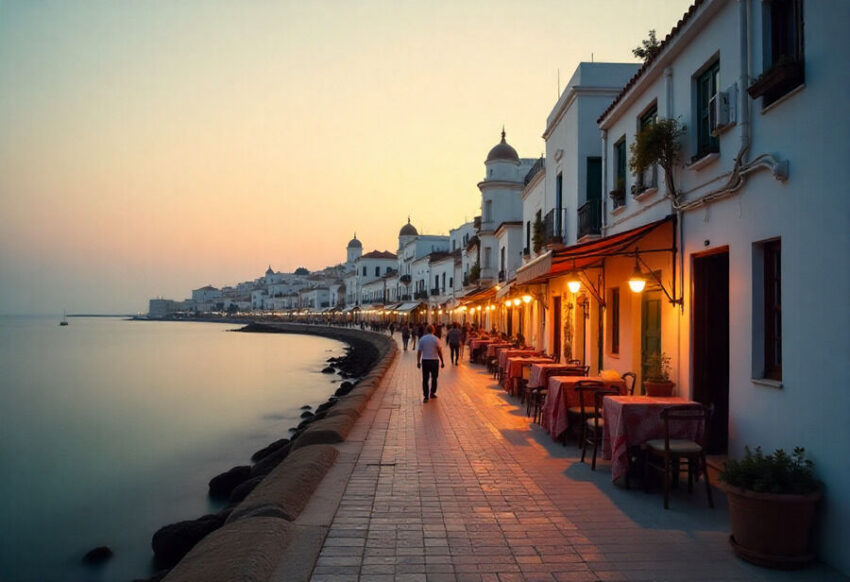
Tracing the lasting legacies of France’s 132-year presence in Algeria — from colonization to cultural connection
By The Global Compass | Published on October 29, 2025
Algeria and France share a history that is intimate, violent, inventive, and unresolved. From the landing at Algiers in 1830 to the exodus of Europeans in 1962 and the quieter cultural entanglements of today, French rule reshaped Algeria’s cities, economy, and institutions — and those legacies remain visible, contested, and alive. This post traces the arc of that presence: the conquest and colonial project; major French contributions; population shifts with a focus on the Pieds-Noirs; and the state of French presence and culture in Algeria today.
1. How It Started: Conquest and Colonial Rule (1830–1962)
France’s military intervention in Algiers in 1830 began a more than 130-year period of conquest and colonization that replaced Ottoman suzerainty with direct French rule. Over the following decades, metropolitan France settled large numbers of Europeans in Algeria, reorganized the territory administratively, and fought long wars of pacification and resistance. By the late 19th and early 20th centuries, Algeria was treated — in law and in practice — as an extension of France rather than a typical colony.

2. What France Built (and Broke): Key Contributions and Impacts
The colonial era left an imprint on Algeria’s physical and institutional landscape. Important features include:
- Infrastructure and Transport: Railways, ports, roads, and urban projects were built to integrate Algeria with France and facilitate settler agriculture and trade. These networks still shape settlement and commerce today.
- Urban Planning and Architecture: French urbanism transformed cities such as Algiers, Oran, and Constantine, adding boulevards and European-style neighborhoods alongside older medinas.
- Education and Legal Institutions: French schools, civil-law systems, and administrative frameworks took root — often unequally, but enduringly. The French language became a tool of administration and upward mobility.
- Economy and Agriculture: New irrigation, vineyards, and export agriculture reshaped Algeria’s rural economy while displacing many indigenous communities.

3. The European Population in Algeria — Growth, Peak, and Exodus
From modest numbers in the mid-19th century, European settlers (French, Spanish, Italian, Maltese, and others) grew to form a large minority in coastal regions and cities. By 1950, they were politically powerful and economically dominant.
At independence in 1962, roughly 800,000 to 1,000,000 Europeans — the Pieds-Noirs and many Algerian Jews — left Algeria for France and beyond. The exodus transformed cities like Oran and Algiers almost overnight.

4. After 1962: Who Remained — and Who Returned?
Most European settlers left between 1962 and 1964. A small number remained but later emigrated as Algeria consolidated independence. While the settler community disappeared, bilateral relations and migration flows (mostly Algerians to France) kept cultural and economic ties alive.
5. The French Presence Today — Numbers, Language, and Culture

Population: According to French government figures, approximately 32,800 French citizens were registered as residents in Algeria in 2021 — a small but visible community, largely composed of businesspeople, dual nationals, and consular staff.
Language and Education: French remains widely used in administration, universities, business, and media. While Algeria promotes Arabic and, increasingly, English, French endures as a key working language for millions of Algerians.
Cultural Footprint: French influences persist in architecture, cuisine, legal systems, and bilingual media. French cultural centers, film festivals, and publishing exchanges remain active, reflecting a complex but ongoing relationship.
6. Contention and Memory: Why the Past Still Matters

Relations between Algiers and Paris remain shaped by memories of war, colonization, and migration. Diplomatic tension, debates over visas, and language policy reforms show that the colonial past is far from settled. Each generation reinterprets the meaning of “French influence” in Algeria — from domination to dialogue.
Conclusion — A Complex, Living Legacy
The French presence in Algeria cannot be reduced to one narrative. It brought modernization, education, and urban growth, but also exploitation, inequality, and trauma. Today, the settler population is gone — yet French language, architecture, and institutions remain deeply embedded in Algerian life. It is a shared past that continues to shape both nations, long after the empire ended.
Further Reading & Sources
- The French Conquest of Algiers — History Today
- Pieds-Noirs: Exodus and Memory — Encyclopedia Britannica
- French Ministry of Foreign Affairs — Algeria country data (2021)
- Le Monde & Reuters — Reports on language reform and Franco-Algerian relations (2024–2025)
Leave a Reply